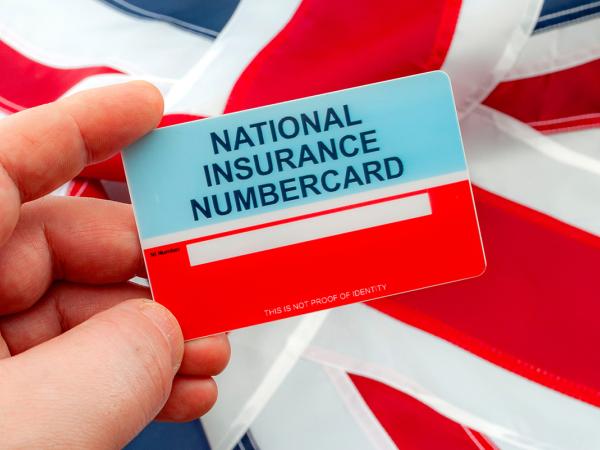
National Insurance numbers
If you want to work or claim benefits in the UK, you must have a National Insurance number. On this page we explain what a National Insurance number is, where to get one and what to do if you lose or forget it.
Content on this page:
National Insurance numbers
A National Insurance number (sometimes called a NINO) is used to uniquely identify you in the UK system. It also ensures that the National Insurance contributions (NICs) or taxes you pay are properly recorded on your HMRC record. To obtain a National Insurance number you must be 16 or over and resident in the UK.
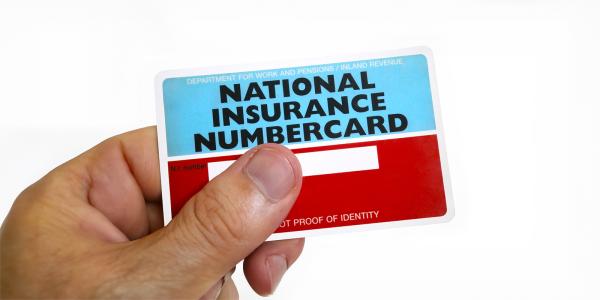
Your National Insurance number is unique to you throughout your life, but it is not a form of identification. You must never use someone else’s National Insurance number. Every person has their own number and each member of your family aged 16 or over should have their own number.
A National Insurance number is made up of 2 letters, 6 numbers and a final letter, for example QQ 12 34 56 A.
Getting a National Insurance number automatically
You are usually sent a National Insurance number just before your 16th birthday. HMRC uses records for child benefit claims to identify children approaching their 16th birthday.
If your parents or guardians claimed child benefit, but you do not receive a National Insurance number by the time you reach 16 as expected, you should contact HMRC to check if one has been issued, in case the letter has gone missing.
If you are a looked-after child, your social worker should apply for a National Insurance number for you three months before your 16th birthday. There is information about this on GOV.UK.
Applying for a National Insurance number
If you have not been automatically issued with a National Insurance number on turning 16, you can apply for one. Your parents/guardians may be required to attend an interview in this case.
There is a tool to help you understand how to find your missing National Insurance number, including the relevant HMRC contact details, on GOV.UK.
There is also information on how to apply for a National Insurance number for the first time and contact details for getting help with your application on GOV.UK.
If you live in Northern Ireland, there is information on nidirect, which includes contact details for getting help with your application, and advice for those who live in the Republic of Ireland but work in Northern Ireland.
National Insurance numbers for migrant workers
If you come to the UK from abroad to work, you will need to apply for a National Insurance number. There is information on how to apply and contact details for getting help with your application on GOV.UK.
However, if you have a biometric residence permit, you might have been given a National Insurance number already – check the back of the permit.
Having a National Insurance number does not mean that you have the right to work in the UK, so you should expect your employer to carry out checks to ensure that you have the right to work in the UK – the law requires employers to do this.
Starting work without a National Insurance number
If you are over 16 and do not yet have a National Insurance number (including if you have come to the UK to work from abroad), you can look for and start work, but you must then apply for a National Insurance number immediately.
Employed
You can start employed work in the UK without a National Insurance number provided you can prove your right to work in the UK. You should tell your employer that you have applied for a National Insurance number and then give it to them when you have received it. There is no time limit.
You should complete the Starter Checklist so that your employer can add you onto the payroll. If you do not have a National Insurance number, you should leave that box blank.
Once you have your National Insurance number, you should give this to your employer as soon as possible. Your employer will send this to HMRC via their payroll submission. HMRC should then be able to match up the tax and National Insurance contributions that you have already paid via the payroll with your new National Insurance number.
Self-employed
If you are self-employed, you will usually need to register to file a self assessment tax return (through which you pay your tax and National Insurance) by 5 October following the tax year in which you start your self-employment. For example, if you start your self-employment in 2025/26 tax year, you will need to register by 5 October 2026.
You register with HMRC as self-employed by either registering for self assessment online or completing form CWF1. You can read more about the options on GOV.UK. You will be asked to provide a National Insurance number when you register, so it is important you apply for your National Insurance number before the registration deadline. We understand HMRC will not accept your registration if it does not include a valid National Insurance number.
Claiming benefits without a National Insurance number
If you make a claim for benefits and you do not currently have a National Insurance number, our understanding is that this will trigger a National Insurance number application. If the application cannot be completed, then the benefit may still be awarded, provided your identity can be verified.
Applying for a student loan without a National Insurance number
You must usually provide your National Insurance number when you apply for a student loan.
You can find more information on our Student finance applications page.
Organisations that need to know your National Insurance number
The following organisations may need to know your National Insurance number:
- HMRC
- Employers and pension providers
- DWP (or Department for Communities in Northern Ireland)
- Local council
- Government agencies administering student finance and student loan repayments
- Banks and building societies
- Other financial services providers such as NS&I or providers of Individual Savings Accounts and other financial products
The above list is not exhaustive, but do take care not to give your National Insurance number to anyone who does not need to know it. Scammers might try to get your number, as well as other personal information from you, so you should take care to protect yourself. You can read more in our page Tax: protecting yourself online.
If you suspect that someone has stolen your National Insurance number and is committing identity fraud or theft, you should contact HMRC and tell them what you think has happened.
If you have lost or forgotten your National Insurance number
If you lose or forget your National Insurance number, you may be able to find it on official documents – for example, payslips from a job, your tax return, or a PAYE coding notice.
You can also print a letter stating your National Insurance number from your Personal Tax Account. You can read about Personal Tax Accounts and how to get one in our page Online tax accounts.
If you use the HMRC app, you can view your National Insurance number there, and also have the option of saving it to your digital wallet in your smartphone. This is a convenient way to ensure you always have your National Insurance number to hand when you need it.
If you are not able to find your National Insurance number using the methods above, it is also possible to ask HMRC to confirm it by:
- completing form CA5403 ‘Your National Insurance Number’ and sending it to HMRC; or
- contacting the National Insurance helpline
HMRC will write to you and confirm the National Insurance number. They will not provide it to you over the telephone.