Devolved taxes
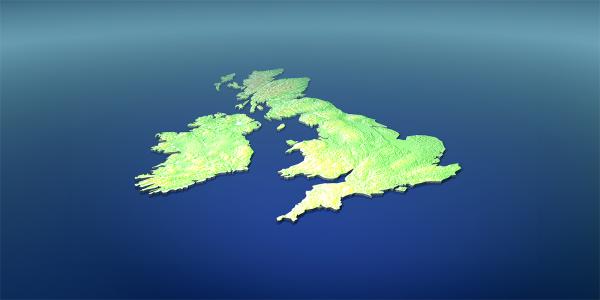
On this page we briefly explain what devolution is. We also explain which tax powers are devolved in each of Scotland, Wales and Northern Ireland.
Content on this page:
Devolution
Devolution gives Scotland, Wales and Northern Ireland some ability to self-govern within the United Kingdom.
Devolution includes the transfer of legislative powers to the Scottish parliament, the Welsh parliament or Senedd Cymru and the Northern Ireland assembly. It also includes granting of powers to the Scottish government, the Welsh government and the Northern Ireland executive.
The UK parliament remains sovereign in law and still legislates for Scotland, Wales and Northern Ireland. By convention, it does not do so for devolved matters without the consent of the relevant parliament or assembly.
Unlike Scotland, Wales and Northern Ireland, England does not have its own government and legislature. Different powers are devolved to each of Scotland, Wales and Northern Ireland.
Below we look at devolved taxes and future proposals.
Devolved taxes in Scotland
Local taxes
Powers over local taxation rest with Scotland – in particular, this means that decisions about council tax and non-domestic (business) rates for Scotland are made in Scotland. These taxes are administered and collected by local councils.
A law passed in 2024 means that local authorities in Scotland are able to introduce a visitor levy on overnight stays in their council area. This is subject to at least an 18-month implementation period. So, the first visitor levies could not come into force until 1 April 2026. See the section below on the Scottish visitor levy.
The Scottish government is exploring the possibility of giving councils the power to charge a cruise ship levy. We expect to hear more about this during 2026.
National taxes
Following the Calman Commission, the Scotland Act 2012 and the Scotland Act 2016, two fully devolved taxes were introduced in Scotland from 1 April 2015. These are:
- land and buildings transaction tax, which replaced stamp duty land tax on transactions taking place in Scotland; and
- Scottish landfill tax, which replaced landfill tax on transactions taking place in Scotland.
Aggregates levy is devolved to Scotland with effect from 1 April 2026. The Scottish aggregates tax replaces the UK aggregates levy for aggregate commercially exploited in Scotland.
Revenue Scotland is responsible for the collection and administration of these three devolved taxes and has published its Charter of Standards and Values. You can find out more information about the Scottish tax authority from Revenue Scotland.
Air passenger duty is due to be fully devolved to Scotland and replaced by air departure tax, with effect from 1 April 2027. The Scottish government is currently exploring an exemption for certain flights to and from Highlands and Islands airports.
The Scotland Act 2012 gave the Scottish parliament the power to introduce a Scottish rate of income tax. The Scottish rate of income tax (SRIT) took effect on 6 April 2016 and applied to Scottish taxpayers during the tax year 2016/17. HMRC were responsible for collecting and administering the SRIT. Scottish income tax replaced the SRIT with effect from 6 April 2017.
It was proposed that revenues from the first 10 percentage points of the standard rate of VAT and the first 2.5 percentage points of the reduced rate of VAT applicable to Scotland should be assigned to Scotland. This is currently on hold.
The Scottish government has also secured the transfer of powers to allow it to create a new devolved tax, a Scottish building safety levy. The Scottish government intends for this to be introduced with effect from 1 April 2028.
Scottish visitor levy
All Scottish local authorities are now able to charge a visitor levy. Visitors pay the visitor levy to their accommodation provider, and the accommodation provider passes the visitor levy to the local authority. The local authority invests the funds from the visitor levy in visitor services.
Each local authority has some flexibility over how they design and implement a visitor levy.
The City of Edinburgh Council is the first Scottish council to introduce a visitor levy. This applies to stays from 24 July 2026 onwards (with some exceptions).
Accommodation providers subject to a visitor levy can submit returns, make payments, update their details and view their reporting and payment history on the visitorlevy.scot website.
You can see which councils have approved visitor levy schemes and find links to further information on each council’s scheme on the visitorlevy.scot website.
There is more information about the visitor levy, including links to further information on councils that have live or forthcoming consultations on a visitor levy on the VisitScotland website.
Devolved taxes in Wales
Following the Silk Commission and the Wales Acts 2014 and 2017, some tax powers are being devolved to the Welsh parliament or Senedd Cymru. Since April 2018 there has been a fully devolved Welsh land transaction tax and a fully devolved Welsh landfill disposals tax; these replaced stamp duty land tax and landfill tax on transactions taking place in Wales.
The Welsh government set up the Welsh Revenue Authority (WRA) to administer these devolved taxes and it has published its Charter for shared values, behaviours and standards.
The Welsh parliament or Senedd Cymru can already pass laws in respect of non-domestic rates (business rates) and council tax – these are classed as local taxation, rather than devolved taxes.
The Silk Commission also recommended the introduction of Welsh rates of income tax. These apply from April 2019. The Welsh rates of income tax apply to the non-savings and non-dividend income of Welsh taxpayers.
National accommodation visitor register and visitor levy
National register
All visitor accommodation providers must be included on a new public national register held by the Welsh Revenue Authority (WRA). The register opens on 1 October 2026 until 31 March 2027. You must complete the register if you take any bookings for overnight stays in Wales and any of these stays are 31 days or less. These include stays in all types of overnight accommodation where there is a payment to stay (so, for example, does not include friends and family staying for free). Types of accommodation could include:
- your main home or spare room
- pitches for tents or caravans
- holiday homes or accommodation on platforms such as Airbnb
- temporary accommodation for events such as rugby matches or music festivals
If you are the person who is legally responsible for the visitor accommodation, you must ensure the national register is completed for each visitor accommodation you own, although it is possible for your letting agent to complete the register on your behalf. You must register even if your accommodation is in an area which is not implementing the visitor levy (see the heading below).
There is detailed guidance on how to register using your GOV.UK One login, what information you need to provide and what you need to do if you need additional support to register on the Welsh government website. If you do not complete the register in time, then you may be subject to a penalty (starting at £100 and potentially going up to £1,400 per property). After registration you will receive a unique registration number. You will also need to update the national register within 30 days if there are any changes to your details or you cease providing overnight visitor accommodation.
Visitor levy
A law passed in 2025 means that local authorities in Wales are able to introduce a visitor levy on overnight stays in their council area. This is subject to a local consultation and implementation period.
The first visitor levy will come into force in 1 April 2027, within the Cardiff local authority. Any bookings or additional guests/nights added to existing bookings made from 28 September 2026 for 1 April 2027 onwards will need to apply the visitor levy, there is guidance about this on the Welsh government website.
Devolved taxes in Northern Ireland
The Northern Ireland assembly can pass laws in respect of local taxation: domestic rates (Northern Ireland’s equivalent of council tax) and non-domestic (business) rates.
A law has been passed providing for the devolution of corporation tax powers to the Northern Ireland assembly, but this is subject to commencement regulations.
More information
There is more information about devolution on GOV.UK.